
If you want to know how to improve hotel RevPAR without discounting, the answer is to sell more of the right rooms at a rate you protect. That means pricing by demand, cleaning up your channel mix, building fenced offers instead of cutting the rate, and owning more of your bookings. We’re Spectra Hospitality, a hotel consultancy in Gurugram. We’ve worked on 500+ hospitality projects since 2006, and we run hotel revenue management for independent and branded hotels in India. These are the seven levers we pull first.
Hotel RevPAR at a glance
| Question | Answer |
|---|---|
| What RevPAR is | Room revenue ÷ rooms available. Same as ADR × occupancy |
| India average, 2025 | About ₹5,400 to ₹5,600 RevPAR, 63% to 65% occupancy, ₹8,500 to ₹8,700 ADR |
| Why discounting hurts | A 15% rate cut needs about 18% more rooms sold just to stand still |
| Fastest lever | Day-of-week and seasonal pricing |
| Biggest long-term lever | More direct bookings and a better channel mix |
| Who watches it for owners | A revenue manager day to day, an asset manager at owner level |
India figures are from the HVS Anarock India Hospitality Industry Overview 2025, published May 2026.
What is RevPAR, and how do you calculate it?
RevPAR, or revenue per available room, is total room revenue divided by the number of rooms you had to sell. You get the same answer by multiplying ADR (average daily rate) by occupancy. CoStar, which runs STR benchmarking, calls it the industry’s standard measure of top-line performance.
Here’s a simple example. A 50-room hotel sells 32 rooms tonight at ₹8,000. Room revenue is ₹2,56,000, and RevPAR is ₹5,120 (₹2,56,000 ÷ 50 rooms).
RevPAR only counts room revenue. It doesn’t tell you what it cost to earn it, which is why we read it next to GOPPAR (gross operating profit per available room) and your channel costs.
Why does discounting usually fail to lift hotel RevPAR?
Because the maths works against you. Take the same 50-room hotel. Here are three ways the night could go (illustrative figures):
| Scenario | ADR | Rooms sold | Occupancy | RevPAR |
|---|---|---|---|---|
| Today | ₹8,000 | 32 | 64% | ₹5,120 |
| Cut the rate 15% | ₹6,800 | 36 | 72% | ₹4,896 |
| Hold the rate, win 4 more rooms | ₹8,000 | 36 | 72% | ₹5,760 |
With the 15% cut, the hotel needs 38 rooms instead of 32 just to match tonight’s ₹2,56,000, and each of those extra rooms still needs cleaning, laundry and breakfast. The discount also trains guests and OTAs to wait for the next one. Holding the rate and finding four more bookings does far better. That’s the first rule of how to improve hotel RevPAR: protect the rate, then win the volume.
So how do you find those four rooms?
How to improve hotel RevPAR: the 7 levers
Lever 1: Price by demand, not by habit
A lot of hotels we audit still run one rack rate with a seasonal tweak. Demand isn’t that flat. Weekends in Goa, weekdays in Gurugram, wedding dates in Udaipur and long weekends in the hills all behave differently.
Set rates by season, day of week and demand, and review them as bookings come in. Push the rate up on dates that are filling early. Add length-of-stay rules on peak nights so one-night bookings don’t block a three-night stay. This is usually the fastest lever, because you can change the rate structure in a few weeks. If you’re working out how to improve hotel RevPAR quickly, start here.

Lever 2: Fix your channel mix
Two rooms at the same rate don’t earn the same. A room sold on your own website keeps most of the money. The same room through an OTA or a wholesaler loses a commission or a margin.
Much of how to improve hotel RevPAR without discounting comes down to where each booking arrives from. Look at your mix across direct bookings, OTAs and the travel trade. Then shift inventory toward the lowest-cost channels on high-demand dates. On slow dates, OTAs earn their place by filling rooms you wouldn’t sell otherwise. Keep rate parity across channels so no one undercuts your own website.
Lever 3: Use fences, not discounts
If you need to stimulate demand, build an offer with a condition attached. Common fences include:
- Advance purchase, booked 21 days or more ahead
- Non-refundable rates
- Minimum stays of two or three nights
- Weekday-only offers for leisure hotels
- Member or repeat-guest rates on your own website
A fenced rate reaches price-sensitive guests without moving your public rate. Guests who book late, flexibly or for one night still pay the full price.
Lever 4: Grow direct bookings
This one takes longer, but it compounds. Every guest who books on your website is cheaper to win next time. For owners asking how to improve hotel RevPAR over several years, this is the lever that keeps paying.
Make the booking engine fast on mobile, show the best rate there, and give people a reason to book direct (breakfast, a late checkout, a room upgrade). Then back it with search, social and email. At Spectra we run hotel digital marketing alongside revenue management for this reason. A price change only works if the right people see it.
Lever 5: Upsell the room, and package the stay
Room-type upsells lift ADR without touching the base rate. Offer the next category up at a fair top-up, before arrival and at check-in.
Packages work too, if you price the room part properly. A weekend stay with dinner, a spa package or a wedding-guest block lets you hold the room rate while the guest sees value in the bundle. For our own boutique brand, Raht, we price stays as curated, all-inclusive estate experiences rather than room-only rates.
Lever 6: Read the pace, not just last month
Last month’s RevPAR tells you what happened. Booking pace tells you what’s about to happen, so knowing how to improve hotel RevPAR next month starts with this report.
Every week, compare rooms and revenue on the books for the next 30, 60 and 90 days against last year and budget. If a date is pacing ahead, raise the rate. If it’s behind, act early with a fenced offer or a push on one channel, instead of panic-discounting a week out.
Pace also helps you decide which group enquiries to take. A low-rated group on a date that would have sold at full price costs you money.
Lever 7: Check the hotel against its competitive set, at owner level
A RevPAR number means little on its own, and nobody can tell you how to improve hotel RevPAR without knowing what the market did. Your RevPAR index, or RGI, compares it with a set of competing hotels. If the market grew 10% and you grew 4%, you lost share.
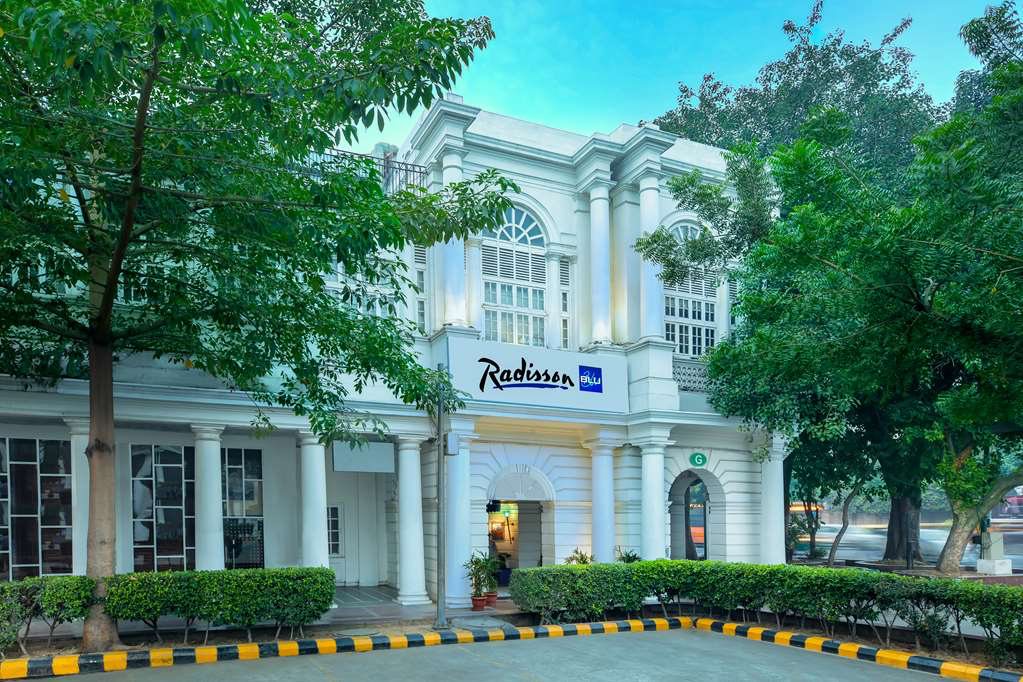
For branded hotels, hotel asset management covers this. An asset manager reviews the operator’s budgets, pricing and monthly results, including STR benchmarking, on the owner’s behalf. Spectra is the asset manager for hotels including Radisson Blu Marina in Connaught Place, which was named Stabilized Hotel of the Year 2024 (Managed category).
Sometimes the problem is the product. Tired rooms or the wrong positioning cap what any pricing strategy can do. Then the fix is a renovation or a rethink, which our guide to building your own hotel brand vs a franchise covers.
Where to start: how to improve hotel RevPAR this week
- Pull 12 months of ADR, occupancy and RevPAR by month and by day of week.
- Split last year’s room revenue by channel, net of commission.
- List every active discount, and add a fence to each one or drop it.
- Set up a weekly pace report for the next 90 days.
- Pick four or five competing hotels and check their rates on your peak and slow dates.
Knowing how to improve hotel RevPAR is one thing; doing it every week is another. If you don’t have a revenue manager in-house, Spectra can act as one on a monthly retainer. We cover pricing, OTA listings and parity, distribution, packages and pace reporting, and we already run it for the four Tiaraa hotels and our own Raht estates.
Want help working out how to improve hotel RevPAR at your property? Talk to Spectra about revenue management. Call or WhatsApp +91 98714 88844, or send us your room count and channels.